
Does a UV Toothbrush Sanitizer Actually Kill Bathroom Bacteria?
Does a UV Toothbrush Sanitizer Actually Kill Bathroom Bacteria?
Your bathroom might be cleaner than you think, except for one item you put in your mouth twice a day. Researchers have found that toothbrushes can contain between 10 million and 1 billion bacteria. Meanwhile, aerosols released after flushing the toilet can deliver faucal matter up to 20 feet in the air, reaching toothbrushes stored on bathroom counters. That statistic alone explains why UV toothbrush sanitizers have surged in popularity, and why so many households are asking: do they actually work?
The short answer is yes, under the right conditions. The longer answer is where things get interesting. This UV toothbrush sanitizer guide breaks down the science, the limitations, and what you should actually do to keep your brush clean.
Key Takeaways
-
UV-C light genuinely kills bacteria: The scientific evidence supporting UV-C toothbrush sanitization is robust across multiple peer-reviewed studies. A clinical study published in the Journal of Basic and Clinical Pharmacy compared UV sanitization against chlorhexidine gluconate and found that UV treatment achieved a statistically significant bacterial count reduction with P = 0.001, outperforming the chemical comparison group. Therefore, if you are choosing between a chemical rinse and a UV device, the science currently favors UV for speed and bacterial reduction.
-
Real-world performance depends on conditions: A 2022 study published in the American Journal of Infection Control found that when toothbrushes were air-dried for 12 hours before UV treatment, bacterial load dropped by only 12-23%, not the advertised 99.9%. Therefore, use your sanitizer on a freshly rinsed (not air-dried) brush, and follow the manufacturer's cycle time precisely.
-
Shadow zones are a genuine weakness: One of the biggest limitations of UV sanitizers is their inability to disinfect areas they cannot directly illuminate, a challenge known as the "shadow problem." This shadowing effect significantly reduces the real-world effectiveness of many consumer UV devices. Therefore, choose a device with a reflective interior chamber rather than a single-sided lamp.
-
Replace your brush regularly too: The ADA recommends replacing your toothbrush every three to four months or sooner if the bristles become frayed or if you have been ill. A sanitizer extends hygiene between replacements but does not substitute for routine renewal.
-
UV sanitizers are safe for babies' pacifiers: The first question on any parent's mind is whether UV sterilizers are safe to use around babies and children. The short answer is yes, so long as they are UL Safety certified, have premium child safety features, and meet regulatory standards. Therefore, look for UL certification on any UV pacifier sanitizer before purchasing.
Quick-Start Prioritization Framework
| Sanitization Method | Best For | Effort Level | Time to Results |
|---|---|---|---|
| UV toothbrush sanitizer | Daily home users, shared bathrooms, travel | Low | 3-10 minutes per cycle |
| UV pacifier sanitizer | Parents of infants and toddlers | Low | 3-5 minutes per cycle |
| Hydrogen peroxide soak | Budget-conscious users, no gadgets | Medium | 15-minute soak |
| Mouthwash soak | Occasional use, existing supplies | Medium | 10-60 minutes |
| Steam sanitizer | High-volume family households | Medium | 5-8 minutes |
| Regular replacement only | Minimal hygiene concern, lowest cost | Very Low | Every 3-4 months |
Start here if you are:
-
A solo bathroom user: A compact UV toothbrush sterilizer or a weekly hydrogen peroxide soak will keep bacterial load low at minimal cost.
-
A shared bathroom household: A wall-mounted or multi-brush UV sanitizer pays back its cost in peace of mind quickly, aim for a device with a drying fan to prevent bacterial regrowth between sessions.
-
A parent of a baby or toddler: A UV pacifier sanitizer is the fastest, chemical-free option; confirm UL Safety certification and auto-shutoff before buying.
-
A frequent traveler: A portable UV cap-style sanitizer fits into a carry-on bag and protects against hotel bathroom contamination without chemicals.
Why Your Bathroom Toothbrush Is Already Filthy
Before evaluating whether a UV toothbrush sanitizer works, it helps to understand what it is working against.
The Toilet Plume Problem
A study conducted by the American Society for Microbiology found that 60% of toothbrushes stored in shared bathrooms contained traces of faucal matter, regardless of whether they were rinsed with hot water, cold water, or even mouthwash. That figure should reframe the conversation entirely. Rinsing your brush under the tap is not disinfection; it is barely a cosmetic gesture.
Numerous studies have shown that aerosols from toilet flushes can contaminate surfaces close by, including floors, toilet seats, and lids. The pathogen's capacity to persist on a surface is a key factor in determining the infection risk it poses. Pathogens such as Shigella, E. coli, C. difficile, the coronavirus that causes SARS, and norovirus can persist for weeks or even months on surfaces. If your toothbrush sits within a meter of your toilet, it is inside the contamination zone on every flush.
What Grows on Bristles
aerosols released after flushing in 32% of toothbrushes in one contamination study, and that is just one pathogen. Prolonged toothbrush utilization encourages contamination by a variety of bacteria, including Candida, Lactobacilli, Pseudomonas, Klebsiella, and Streptococcus. These are pathogens that could cause oral infections, digestive distress, and in vulnerable individuals, systemic illness. Therefore, if you share a bathroom with children, elderly relatives, or anyone immunocompromised, toothbrush hygiene deserves real attention.
Pro tip: Keep the toilet lid closed before flushing. This single habit can meaningfully reduce the volume of aerosol that reaches your bathroom counter, and costs nothing. Pair it with a UV sanitizer for a layered defense.

How a UV Toothbrush Sanitizer Actually Works
The UV-C Mechanism
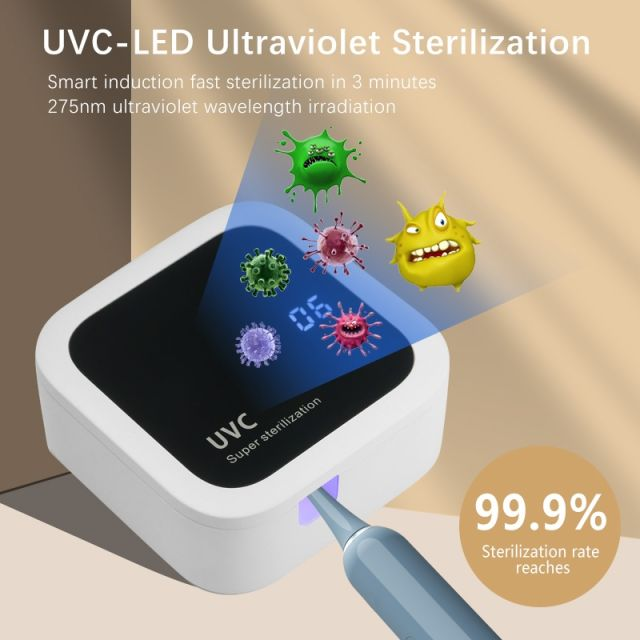
UV toothbrush sanitizers work by utilizing ultraviolet germicidal irradiation (UVGI) to disinfect toothbrushes. UVGI uses short-wavelength UV-C radiation that damages the DNA and RNA of microorganisms like bacteria, viruses, and fungi. The high energy from UV-C rays creates thymine dimers in DNA and RNA, preventing replication and destroying the organism's ability to reproduce and cause infection.
In plain language: UV-C light does not "wash" bacteria away. It scrambles their genetic material so completely that they cannot reproduce. The difference is important, a dead bacterium cannot cause infection, even if it remains on the bristle surface.
UV-C with a wavelength of 200-280 nm destroys bacteria, viruses, and fungi by preventing their reproduction through damaging their genetic material. The most effective germicidal wavelength is around 254 nanometers. When shopping for the best UV toothbrush sanitizer, check that the product specifies a UV-C wavelength in the 253-265 nm range, vague listings that simply say "UV light" may be referring to UV-A, which is considerably weaker.
What Happens Inside the Device
The user simply inserts their toothbrush into the sanitizing chamber and closes the lid. The device then turns on the UV lamp for a preset amount of time, typically anywhere from five to ten minutes. During this treatment cycle, the UV light irradiates all sides of the bristles, handle, and toothbrush head to disinfect them. The optimum exposure time allows sufficient UV energy to react with the microorganisms' DNA and RNA. After the timed sanitizing process, the UV light is automatically shut off, allowing the user to safely remove their disinfected toothbrush.
A UV toothbrush sanitizer is safe for daily use as long as it is built with proper safety features. Modern devices are fully enclosed and automatically shut off the UV light when you open them. This prevents any direct exposure to ultraviolet light. Direct UV-C exposure to skin or eyes is harmful, so this auto-shutoff feature is a non-negotiable safety requirement.
Does a UV Sanitizer Actually Kill Bacteria? What the Research Says
Evidence That It Works
One study tested the Philips Sonicare UV Sanitizer and found it reduced E. coli bacteria by over 99% on toothbrush heads after a ten-minute UV-C exposure. That is a meaningful reduction, and it is in line with findings across multiple research programmed.
To put a 99.9% kill rate in perspective: if your brush started with one million bacteria, that reduction leaves only about 1,000, a night-and-day difference. Several clinical studies by Dr R. Tom Glass, a professor of oral pathology, confirm that deadly microorganisms can incubate on toothbrushes, and that UV sanitization is highly effective in killing those pathogens. Therefore, even if a sanitizer falls slightly short of the headline figure in real-world use, the reduction in bacterial load is substantial and clinically relevant.
Research comparing multiple disinfection methods, including chlorhexidine, hydrogen peroxide, UV radiation, and others, found that all reduced bacterial counts significantly, with chemical and UV methods among the most effective.
Where UV Sanitizers Fall Short
In my experience reviewing hygiene research, the gap between lab results and real-world performance is where most consumer confusion originates. The science is sound; the conditions matter enormously.
A UV sanitizer must deliver direct light exposure to be effective, any surface in shadow or around corners will remain untouched by the disinfecting rays, potentially leaving dangerous pathogens behind.
Research shows the highest microbial density resides in the bristle base and handle junction, where moisture pools, biofilm forms, and UV light rarely reaches. This is the shadow problem in practice: the areas of your toothbrush that harbor the most bacteria are also the areas least likely to receive full UV exposure in a basic device. Therefore, when evaluating the best UV toothbrush sanitizer for your household, priorities devices with 360-degree reflective chambers over those with a single lamp on one side.
High humidity can also reduce UV output, and performance can be affected by temperature. A steamy bathroom post-shower is, unfortunately, a less-than-ideal environment for UV sanitization. Allow the room to ventilate before running a cycle if possible.
Pro tip: If your UV sanitizer offers a drying fan in addition to UV-C treatment, use both functions. Sanitizing only lasts if the brush does not go back to being wet. Bacteria thrive on damp bristles for days, and dentists warn that a closed cap or travel cover only traps the moisture and breeds more of them.
UV vs Steam Sanitizer: Which Should You Choose?
Both UV and steam sanitizers reduce bacterial loads on toothbrushes. The choice comes down to your household's priorities.
A study published in the *Journal of International Society of Preventive and Community Dentistry* found that after sanitization, there was a significant reduction in microbial contamination in both microwave and UV group toothbrushes compared to control group toothbrushes, whereas the microbial count in the microwave group was significantly less than in the UV group. This suggests steam and heat-based methods may outperform UV in raw bacterial kill rates, but that advantage comes with trade-offs.
Pros:
-
UV sanitizers work without heat or chemicals
-
UV
Does a UV Toothbrush Sanitizer Actually Kill Bathroom Bacteria?
Your bathroom might be cleaner than you think, except for one item you put in your mouth twice a day. Researchers have found that toothbrushes can contain between 10 million and 1 billion bacteria. Meanwhile, aerosols released after flushing the toilet can deliver faucal matter up to 20 feet in the air, reaching toothbrushes stored on bathroom counters. That statistic alone explains why UV toothbrush sanitizers have surged in popularity, and why so many households are asking: do they actually work?
The short answer is yes, under the right conditions. The longer answer is where things get interesting. This UV toothbrush sanitizer guide breaks down the science, the limitations, and what you should actually do to keep your brush clean.
Key Takeaways
-
UV-C light genuinely kills bacteria: The scientific evidence supporting UV-C toothbrush sanitization is robust across multiple peer-reviewed studies. A clinical study published in the Journal of Basic and Clinical Pharmacy compared UV sanitization against chlorhexidine gluconate and found that UV treatment achieved a statistically significant bacterial count reduction with P = 0.001, outperforming the chemical comparison group. Therefore, if you are choosing between a chemical rinse and a UV device, the science currently favors UV for speed and bacterial reduction.
-
Real-world performance depends on conditions: A 2022 study published in the American Journal of Infection Control found that when toothbrushes were air-dried for 12 hours before UV treatment, bacterial load dropped by only 12-23%, not the advertised 99.9%. Therefore, use your sanitizer on a freshly rinsed (not air-dried) brush, and follow the manufacturer's cycle time precisely.
-
Shadow zones are a genuine weakness: One of the biggest limitations of UV sanitizers is their inability to disinfect areas they cannot directly illuminate, a challenge known as the "shadow problem." This shadowing effect significantly reduces the real-world effectiveness of many consumer UV devices. Therefore, choose a device with a reflective interior chamber rather than a single-sided lamp.
-
Replace your brush regularly too: The ADA recommends replacing your toothbrush every three to four months or sooner if the bristles become frayed or if you have been ill. A sanitizer extends hygiene between replacements but does not substitute for routine renewal.
-
UV sanitizers are safe for babies' pacifiers: The first question on any parent's mind is whether UV sterilizers are safe to use around babies and children. The short answer is yes, so long as they are UL Safety certified, have premium child safety features, and meet regulatory standards. Therefore, look for UL certification on any UV pacifier sanitizer before purchasing.
Quick-Start Prioritization Framework
Sanitization Method
Best For
Effort Level
Time to Results
UV toothbrush sanitizer
Daily home users, shared bathrooms, travel
Low
3-10 minutes per cycle
UV pacifier sanitizer
Parents of infants and toddlers
Low
3-5 minutes per cycle
Hydrogen peroxide soak
Budget-conscious users, no gadgets
Medium
15-minute soak
Mouthwash soak
Occasional use, existing supplies
Medium
10-60 minutes
Steam sanitizer
High-volume family households
Medium
5-8 minutes
Regular replacement only
Minimal hygiene concern, lowest cost
Very Low
Every 3-4 months
Start here if you are:
-
A solo bathroom user: A compact UV toothbrush sterilizer or a weekly hydrogen peroxide soak will keep bacterial load low at minimal cost.
-
A shared bathroom household: A wall-mounted or multi-brush UV sanitizer pays back its cost in peace of mind quickly, aim for a device with a drying fan to prevent bacterial regrowth between sessions.
-
A parent of a baby or toddler: A UV pacifier sanitizer is the fastest, chemical-free option; confirm UL Safety certification and auto-shutoff before buying.
-
A frequent traveler: A portable UV cap-style sanitizer fits into a carry-on bag and protects against hotel bathroom contamination without chemicals.
Why Your Bathroom Toothbrush Is Already Filthy
Before evaluating whether a UV toothbrush sanitizer works, it helps to understand what it is working against.
The Toilet Plume Problem
A study conducted by the American Society for Microbiology found that 60% of toothbrushes stored in shared bathrooms contained traces of faucal matter, regardless of whether they were rinsed with hot water, cold water, or even mouthwash. That figure should reframe the conversation entirely. Rinsing your brush under the tap is not disinfection; it is barely a cosmetic gesture.
Numerous studies have shown that aerosols from toilet flushes can contaminate surfaces close by, including floors, toilet seats, and lids. The pathogen's capacity to persist on a surface is a key factor in determining the infection risk it poses. Pathogens such as Shigella, E. coli, C. difficile, the coronavirus that causes SARS, and norovirus can persist for weeks or even months on surfaces. If your toothbrush sits within a meter of your toilet, it is inside the contamination zone on every flush.
What Grows on Bristles
aerosols released after flushing in 32% of toothbrushes in one contamination study, and that is just one pathogen. Prolonged toothbrush utilization encourages contamination by a variety of bacteria, including Candida, Lactobacilli, Pseudomonas, Klebsiella, and Streptococcus. These are pathogens that could cause oral infections, digestive distress, and in vulnerable individuals, systemic illness. Therefore, if you share a bathroom with children, elderly relatives, or anyone immunocompromised, toothbrush hygiene deserves real attention.
Pro tip: Keep the toilet lid closed before flushing. This single habit can meaningfully reduce the volume of aerosol that reaches your bathroom counter, and costs nothing. Pair it with a UV sanitizer for a layered defense.
How a UV Toothbrush Sanitizer Actually Works
The UV-C Mechanism
UV toothbrush sanitizers work by utilizing ultraviolet germicidal irradiation (UVGI) to disinfect toothbrushes. UVGI uses short-wavelength UV-C radiation that damages the DNA and RNA of microorganisms like bacteria, viruses, and fungi. The high energy from UV-C rays creates thymine dimers in DNA and RNA, preventing replication and destroying the organism's ability to reproduce and cause infection.
In plain language: UV-C light does not "wash" bacteria away. It scrambles their genetic material so completely that they cannot reproduce. The difference is important, a dead bacterium cannot cause infection, even if it remains on the bristle surface.
UV-C with a wavelength of 200-280 nm destroys bacteria, viruses, and fungi by preventing their reproduction through damaging their genetic material. The most effective germicidal wavelength is around 254 nanometers. When shopping for the best UV toothbrush sanitizer, check that the product specifies a UV-C wavelength in the 253-265 nm range, vague listings that simply say "UV light" may be referring to UV-A, which is considerably weaker.
What Happens Inside the Device
The user simply inserts their toothbrush into the sanitizing chamber and closes the lid. The device then turns on the UV lamp for a preset amount of time, typically anywhere from five to ten minutes. During this treatment cycle, the UV light irradiates all sides of the bristles, handle, and toothbrush head to disinfect them. The optimum exposure time allows sufficient UV energy to react with the microorganisms' DNA and RNA. After the timed sanitizing process, the UV light is automatically shut off, allowing the user to safely remove their disinfected toothbrush.
A UV toothbrush sanitizer is safe for daily use as long as it is built with proper safety features. Modern devices are fully enclosed and automatically shut off the UV light when you open them. This prevents any direct exposure to ultraviolet light. Direct UV-C exposure to skin or eyes is harmful, so this auto-shutoff feature is a non-negotiable safety requirement.
Does a UV Sanitizer Actually Kill Bacteria? What the Research Says
Evidence That It Works
One study tested the Philips Sonicare UV Sanitizer and found it reduced E. coli bacteria by over 99% on toothbrush heads after a ten-minute UV-C exposure. That is a meaningful reduction, and it is in line with findings across multiple research programmed.
To put a 99.9% kill rate in perspective: if your brush started with one million bacteria, that reduction leaves only about 1,000, a night-and-day difference. Several clinical studies by Dr R. Tom Glass, a professor of oral pathology, confirm that deadly microorganisms can incubate on toothbrushes, and that UV sanitization is highly effective in killing those pathogens. Therefore, even if a sanitizer falls slightly short of the headline figure in real-world use, the reduction in bacterial load is substantial and clinically relevant.
Research comparing multiple disinfection methods, including chlorhexidine, hydrogen peroxide, UV radiation, and others, found that all reduced bacterial counts significantly, with chemical and UV methods among the most effective.
Where UV Sanitizers Fall Short
In my experience reviewing hygiene research, the gap between lab results and real-world performance is where most consumer confusion originates. The science is sound; the conditions matter enormously.
A UV sanitizer must deliver direct light exposure to be effective, any surface in shadow or around corners will remain untouched by the disinfecting rays, potentially leaving dangerous pathogens behind.
Research shows the highest microbial density resides in the bristle base and handle junction, where moisture pools, biofilm forms, and UV light rarely reaches. This is the shadow problem in practice: the areas of your toothbrush that harbor the most bacteria are also the areas least likely to receive full UV exposure in a basic device. Therefore, when evaluating the best UV toothbrush sanitizer for your household, priorities devices with 360-degree reflective chambers over those with a single lamp on one side.
High humidity can also reduce UV output, and performance can be affected by temperature. A steamy bathroom post-shower is, unfortunately, a less-than-ideal environment for UV sanitization. Allow the room to ventilate before running a cycle if possible.
Pro tip: If your UV sanitizer offers a drying fan in addition to UV-C treatment, use both functions. Sanitizing only lasts if the brush does not go back to being wet. Bacteria thrive on damp bristles for days, and dentists warn that a closed cap or travel cover only traps the moisture and breeds more of them.
UV vs Steam Sanitizer: Which Should You Choose?
Both UV and steam sanitizers reduce bacterial loads on toothbrushes. The choice comes down to your household's priorities.
A study published in the *Journal of International Society of Preventive and Community Dentistry* found that after sanitization, there was a significant reduction in microbial contamination in both microwave and UV group toothbrushes compared to control group toothbrushes, whereas the microbial count in the microwave group was significantly less than in the UV group. This suggests steam and heat-based methods may outperform UV in raw bacterial kill rates, but that advantage comes with trade-offs.
Pros:
-
UV sanitizers work without heat or chemicals
-
UV sanitizers are faster (3-10 minutes vs 5-15 minutes for steam)
-
UV sanitizers are safer for bristle longevity, heat can warp synthetic fibers over time
-
UV pacifier sanitizers are ideal for silicone items that may degrade under sustained heat
Cons:
-
UV sanitizers cannot reach shadow zones without reflective chambers
-
UV sanitizers leave no residual antimicrobial protection once switched off
-
UV sanitizers vary widely in quality, cheaper models may deliver insufficient UV dose
-
Steam sanitizers may achieve higher kill rates in controlled conditions
Thermal sanitization methods, such as steam cleaning, rely on high temperatures to denature microbial proteins. These methods are highly effective but energy-intensive and unsuitable for heat-sensitive materials. UV sanitization operates at room temperature, preserving the integrity of delicate surfaces. For households sanitizing silicone pacifiers alongside toothbrushes, UV is the safer daily option.
UV Pacifier Sanitizers: A Guide for Parents
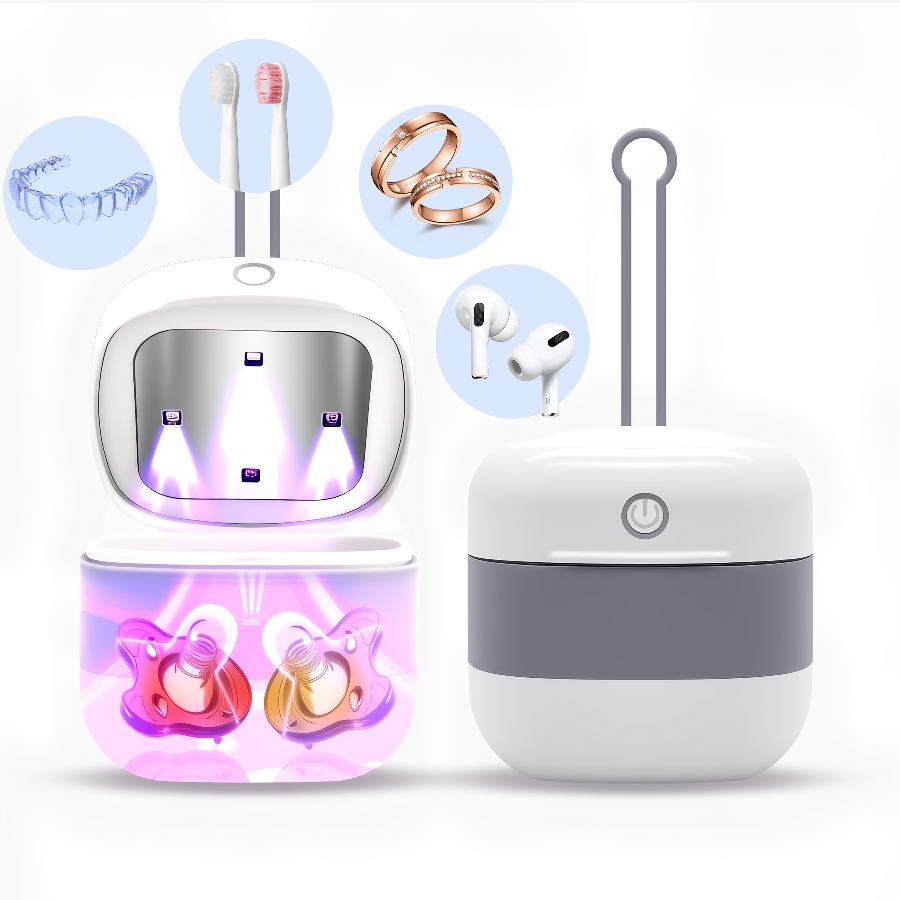
For parents of babies and toddlers, the UV sanitizer conversation extends well beyond toothbrushes. A UV pacifier sanitizer offers a chemical-free, heat-free way to address one of the most contaminated items in any nursery.
Why Pacifiers Need Regular Sanitization
Babies have delicate immune systems that are still developing, leaving them more susceptible to infections and illnesses. Pacifiers, being an essential comfort item for many infants, can accumulate harmful germs and bacteria from their surroundings. A dummy dropped on a café floor and wiped on a parent's sleeve is not sanitized; it is redistributed with different bacteria.
According to the CDC (Centers for Disease Control and Prevention), baby feeding items should be sterilized at least once every 24 hours. That benchmark makes a UV pacifier sanitizer genuinely practical: a 3-5 minute cycle overnight keeps pacifiers ready for the morning without boiling, sterilizing tablets, or chemical residue.
Safety Considerations for Baby UV Sanitizers
UV-C light sanitizes without the use of heat, water, or harsh chemicals. The sterilizer features a child-safe UV light that automatically shuts off when the product flap is opened, alleviating any concerns of unnecessary light exposure.
Silicone has a high resistance to UV light and ozone. However, it can also show signs of degradation with more exposure to UV-C light. Therefore, do not exceed the manufacturer's recommended cycle length when sanitizing silicone dummies. Occasional use is perfectly safe; running multiple back-to-back cycles daily on the same item may reduce its lifespan over several months.
Pro tip: For parents using a UV pacifier sanitizer, wash the dummy with warm soapy water first before placing it in the device. UV-C works on clean surfaces, organic matter such as food residue can shield bacteria from the light and reduce effectiveness significantly.
UV Sanitizer Alternatives: Free and Low-Cost Options That Work
A UV light sanitizer guide would be incomplete without an honest look at what else achieves comparable results. I've found that several no-gadget methods hold up well in the research, which is reassuring whether you are budget-conscious or simply want a backup strategy.
Hydrogen Peroxide Soak
A 3% hydrogen peroxide solution is known to disinfect a toothbrush. Keep the toothbrush in the solution for a few minutes and then rinse thoroughly with water before use. Hydrogen peroxide has a practical edge over most alternatives: it is inexpensive, widely available, requires no special equipment, and a single bottle lasts months of weekly soaks. The downside is that it leaves your brush wet, reintroducing the moisture problem that promotes bacterial regrowth.
Mouthwash Soak
Many dental professionals recommend soaking toothbrushes in an antibacterial mouthwash or rinse as a way to kill germs between uses. Solutions like Listerine contain essential oils that have disinfecting properties. Studies show rinsing with mouthwash significantly decreases bacterial load. However, most rinses require 10-60 minute soak times to be effective and may not penetrate deep into bristles. Therefore, if you use mouthwash as a sanitizer, soak for the full 15-30 minutes rather than a quick dip, and air dry the brush vertically afterwards.
What the Research Says Overall
Studies in dental journals demonstrate that UV sanitizers effectively kill bacteria and microorganisms, but other forms of sanitizing, using common household products, were found to be equally or more successful at eliminating microorganisms from toothbrushes. The honest conclusion: UV sanitizers offer unmatched convenience and speed, but they are a premium solution to a problem that can also be addressed inexpensively. The best option is the one you will actually use consistently.
Frequently Asked Questions
What is a UV toothbrush sanitizer and how does it work?
Studies in dental journals used to disinfect the toothbrush by applying short-wavelength ultraviolet (UV-C) light to kill or inactivate microorganisms. A UV toothbrush sanitizer works by exposing the toothbrush head to UV-C light inside a closed chamber. This light disrupts the DNA of bacteria, which prevents them from surviving or multiplying. The whole sanitizing process usually takes just a few minutes and runs automatically after you place the toothbrush inside the device.
Are UV toothbrush sanitizers genuinely effective or just marketing?
Both, depending on the device. A properly designed toothbrush sanitizer can seriously reduce bacteria levels on your toothbrush bristles. Studies and lab tests show that UV toothbrush sanitizers can reduce up to 99.9% of common oral bacteria when used correctly. How effective they are depends on the UV-C wavelength, how long the toothbrush is exposed, whether it is properly enclosed, and whether you use it regularly. Cheaper devices with inadequate UV-C dose or poor chamber design deliver disappointing results.
Is a UV pacifier sanitizer safe for babies?
This form of sterilization is quick, chemical-free, and leaves no residue, ensuring your baby's pacifier is a safe and hygienic source of comfort. The critical safety requirement is that the device must feature an auto-shutoff that activates the moment the lid or flap is opened, preventing any direct UV-C exposure. You should only use baby sterilizers certified by Underwriters Laboratories (UL) that meet all safety regulations, especially for baby essentials.
What should I look for when buying the best UV toothbrush sanitizer?
Look for a device that specifies a UV-C wavelength of 253-265 nm, has a fully enclosed reflective chamber, includes an auto-shutoff safety feature, and ideally combines UV-C with a drying fan to prevent bacterial regrowth on damp bristles. A properly designed toothbrush sterilizers are the most common and practical option. They provide consistent sanitization without chemicals, heat, or any manual effort on your part. If you share a bathroom with multiple people, choose a model that can accommodate two or more brush heads simultaneously.
Do I still need to replace my toothbrush if I use a UV sanitizer?
Yes. A UV sanitizer reduces bacterial load between uses but does not restore worn bristle effectiveness or remove embedded debris. Replace every three to four months, or sooner if bristles fray. Worn bristles harbor more microbes and clean less effectively. After an illness, replace the brush immediately, UV sanitization reduces but cannot guarantee zero viral survival on bristle surfaces.
The Bottom Line
A quality UV toothbrush sanitizer does kill bathroom bacteria, and the research backs that up clearly when devices are used correctly, on a dry-enough brush, in a well-designed enclosure. The shadow problem is real, the moisture caveat matters, and cheaper devices cut corners on UV dose. However, for most households, particularly those with shared bathrooms, young children, or anyone with a compromised immune system, a UV sanitizer represents a meaningful upgrade in daily hygiene that requires almost no effort to maintain.
The same logic extends to UV pacifier sanitizers for parents of babies and toddlers: quick, chemical-free, and compatible with the CDC's recommendation for daily sterilization of feeding items.
For a wide range of hygiene products and accessories of all kinds, many online retailers offer household essentials and practical everyday items worth exploring.
Sources
-
Toothbrush Sanitizer Overview, Wikipedia. Overview of UV toothbrush sanitization and dental journal evidence. Studies in dental journals
-
American Journal of Infection Control (2022) on real-world UV performance, Alibaba Product Insights analysis. https://www.alibaba.com/product-insights/are-portable-uv-toothbrush-sanitizers-actually-killing-bacteria-or-just-creating-false-confidence.html
-
Do Toothbrush Sanitizers Work? Clinical Evidence, OrellaUV Blog. https://orellauv.com/blogs/orellauv-blog/do-toothbrush-sanitizers-work-the-science
-
UV Toothbrush Sanitizer Effectiveness: Dentist's Perspective, ToothbrushSanitiserHolder.com. Many dental professionals
-
Contamination of Used Toothbrushes and Decontamination, SciELO. Peer-reviewed study on bathroom contamination and decontamination agents. aerosols released after flushing
-
Toothbrush Contamination by Toilet Plumes, PubMed Central (NCBI). Peer-reviewed comparative study. https://www.ncbi.nlm.nih.gov/pmc/articles/PMC12357730/
-
Comparative Evaluation of UV and Microwave Sanitization Techniques, PMC/NCBI. Journal of International Society of Preventive and Community Dentistry. https://pmc.ncbi.nlm.nih.gov/articles/PMC3894078
-
Effectiveness of Alternative Methods for Toothbrush Disinfection, PMC/NCBI. In vitro study comparing sodium hypochlorite, white vinegar, UV, and microwave. https://www.ncbi.nlm.nih.gov/pmc/articles/PMC4058182/
-
UV Sanitizers: Advantages and Limitations, PacLights. https://www.paclights.com/learning-center/a-deep-dive-into-the-advantages-and-limitations-of-sanitizer-ultraviolet/
-
UV Sanitizers: The Shadow Problem, DoItYourselves.com. https://doityourselves.com/uv-sanitizers-sound-smart-but-theres-a-catch/
-
Are UV Sterilizers Safe for Babies?, TheToddly. You should only use baby
-
5 Tips for Buying a UV Sterilizer for Your Baby, Munchkin Blog. https://www.munchkin.com/blog/5-tips-to-consider-when-buying-a-uv-light-sterilizer
-
How to Sterilize Pacifiers, Momcozy. https://www.mayoclinic.org/healthy-lifestyle/infant-and-toddler-health/in-depth/pacifiers/art-20048140
-
Toothbrush Sanitizer: What It Is and How It Works, OrellaUV. A properly designed toothbrush
-
Is Your Toothbrush Contaminated?, Clínica Romero / American Society for Microbiology Study. A study conducted by the American
-
ADA Toothbrush Guidance, American Dental Association. https://www.ada.org/resources/ada-library/oral-health-topics/toothbrushes
-
Hydrogen Peroxide Toothbrush Disinfection Guide, ScienceInsights.org. https://scienceinsights.org/how-to-clean-your-toothbrush-with-hydrogen-peroxide/
are faster (3-10 minutes vs 5-15 minutes for steam)
-
-
UV sanitisers are safer for bristle longevity, heat can warp synthetic fibres over time
-
UV pacifier sanitisers are ideal for silicone items that may degrade under sustained heat
Cons:
-
UV sanitizers cannot reach shadow zones without reflective chambers
-
UV sanitizers leave no residual antimicrobial protection once switched off
-
UV sanitizers vary widely in quality, cheaper models may deliver insufficient UV dose
-
Steam sanitizers may achieve higher kill rates in controlled conditions
Thermal sanitization methods, such as steam cleaning, rely on high temperatures to denature microbial proteins. These methods are highly effective but energy-intensive and unsuitable for heat-sensitive materials. UV sanitization operates at room temperature, preserving the integrity of delicate surfaces. For households sanitizing silicone pacifiers alongside toothbrushes, UV is the safer daily option.
UV Pacifier Sanitizers: A Guide for Parents
For parents of babies and toddlers, the UV sanitizer conversation extends well beyond toothbrushes. A UV pacifier sanitizer offers a chemical-free, heat-free way to address one of the most contaminated items in any nursery.
Why Pacifiers Need Regular Sanitization
Babies have delicate immune systems that are still developing, leaving them more susceptible to infections and illnesses. Pacifiers, being an essential comfort item for many infants, can accumulate harmful germs and bacteria from their surroundings. A dummy dropped on a café floor and wiped on a parent's sleeve is not sanitized; it is redistributed with different bacteria.
According to the CDC (Centers for Disease Control and Prevention), baby feeding items should be sterilized at least once every 24 hours. That benchmark makes a UV pacifier sanitizer genuinely practical: a 3-5 minute cycle overnight keeps pacifiers ready for the morning without boiling, sterilizing tablets, or chemical residue.
Safety Considerations for Baby UV Sanitizers
UV-C light sanitizes without the use of heat, water, or harsh chemicals. The sterilizer features a child-safe UV light that automatically shuts off when the product flap is opened, alleviating any concerns of unnecessary light exposure.
Silicone has a high resistance to UV light and ozone. However, it can also show signs of degradation with more exposure to UV-C light. Therefore, do not exceed the manufacturer's recommended cycle length when sanitizing silicone dummies. Occasional use is perfectly safe; running multiple back-to-back cycles daily on the same item may reduce its lifespan over several months.
Pro tip: For parents using a UV pacifier sanitizer, wash the dummy with warm soapy water first before placing it in the device. UV-C works on clean surfaces, organic matter such as food residue can shield bacteria from the light and reduce effectiveness significantly.
UV Sanitizer Alternatives: Free and Low-Cost Options That Work
A UV light sanitizer guide would be incomplete without an honest look at what else achieves comparable results. I've found that several no-gadget methods hold up well in the research, which is reassuring whether you are budget-conscious or simply want a backup strategy.
Hydrogen Peroxide Soak
A 3% hydrogen peroxide solution is known to disinfect a toothbrush. Keep the toothbrush in the solution for a few minutes and then rinse thoroughly with water before use. Hydrogen peroxide has a practical edge over most alternatives: it is inexpensive, widely available, requires no special equipment, and a single bottle lasts months of weekly soaks. The downside is that it leaves your brush wet, reintroducing the moisture problem that promotes bacterial regrowth.
Mouthwash Soak
Many dental professionals recommend soaking toothbrushes in an antibacterial mouthwash or rinse as a way to kill germs between uses. Solutions like Listerine contain essential oils that have disinfecting properties. Studies show rinsing with mouthwash significantly decreases bacterial load. However, most rinses require 10-60 minute soak times to be effective and may not penetrate deep into bristles. Therefore, if you use mouthwash as a sanitizer, soak for the full 15-30 minutes rather than a quick dip, and air dry the brush vertically afterwards.
What the Research Says Overall
Studies in dental journals demonstrate that UV sanitizers effectively kill bacteria and microorganisms, but other forms of sanitizing, using common household products, were found to be equally or more successful at eliminating microorganisms from toothbrushes. The honest conclusion: UV sanitizers offer unmatched convenience and speed, but they are a premium solution to a problem that can also be addressed inexpensively. The best option is the one you will actually use consistently.
Frequently Asked Questions
What is a UV toothbrush sanitizer and how does it work?
Studies in dental journals used to disinfect the toothbrush by applying short-wavelength ultraviolet (UV-C) light to kill or inactivate microorganisms. A UV toothbrush sanitizer works by exposing the toothbrush head to UV-C light inside a closed chamber. This light disrupts the DNA of bacteria, which prevents them from surviving or multiplying. The whole sanitizing process usually takes just a few minutes and runs automatically after you place the toothbrush inside the device.
Are UV toothbrush sanitizers genuinely effective or just marketing?
Both, depending on the device. A properly designed toothbrush sanitizer can seriously reduce bacteria levels on your toothbrush bristles. Studies and lab tests show that UV toothbrush sanitizers can reduce up to 99.9% of common oral bacteria when used correctly. How effective they are depends on the UV-C wavelength, how long the toothbrush is exposed, whether it is properly enclosed, and whether you use it regularly. Cheaper devices with inadequate UV-C dose or poor chamber design deliver disappointing results.
Is a UV pacifier sanitizer safe for babies?
This form of sterilization is quick, chemical-free, and leaves no residue, ensuring your baby's pacifier is a safe and hygienic source of comfort. The critical safety requirement is that the device must feature an auto-shutoff that activates the moment the lid or flap is opened, preventing any direct UV-C exposure. You should only use baby sterilizers certified by Underwriters Laboratories (UL) that meet all safety regulations, especially for baby essentials.
What should I look for when buying the best UV toothbrush sanitizer?
Look for a device that specifies a UV-C wavelength of 253-265 nm, has a fully enclosed reflective chamber, includes an auto-shutoff safety feature, and ideally combines UV-C with a drying fan to prevent bacterial regrowth on damp bristles. A properly designed toothbrush sterilizers are the most common and practical option. They provide consistent sanitization without chemicals, heat, or any manual effort on your part. If you share a bathroom with multiple people, choose a model that can accommodate two or more brush heads simultaneously.
Do I still need to replace my toothbrush if I use a UV sanitizer?
Yes. A UV sanitizer reduces bacterial load between uses but does not restore worn bristle effectiveness or remove embedded debris. Replace every three to four months, or sooner if bristles fray. Worn bristles harbor more microbes and clean less effectively. After an illness, replace the brush immediately, UV sanitization reduces but cannot guarantee zero viral survival on bristle surfaces.
The Bottom Line
A quality UV toothbrush sanitizer does kill bathroom bacteria, and the research backs that up clearly when devices are used correctly, on a dry-enough brush, in a well-designed enclosure. The shadow problem is real, the moisture caveat matters, and cheaper devices cut corners on UV dose. However, for most households, particularly those with shared bathrooms, young children, or anyone with a compromised immune system, a UV sanitizer represents a meaningful upgrade in daily hygiene that requires almost no effort to maintain.
The same logic extends to UV pacifier sanitizers for parents of babies and toddlers: quick, chemical-free, and compatible with the CDC's recommendation for daily sterilization of feeding items.
For a wide range of hygiene products and accessories of all kinds, many online retailers offer household essentials and practical everyday items worth exploring.
Sources
-
Toothbrush Sanitizer Overview, Wikipedia. Overview of UV toothbrush sanitization and dental journal evidence. Studies in dental journals
-
American Journal of Infection Control (2022) on real-world UV performance, Alibaba Product Insights analysis. https://www.alibaba.com/product-insights/are-portable-uv-toothbrush-sanitizers-actually-killing-bacteria-or-just-creating-false-confidence.html
-
Do Toothbrush Sanitizers Work? Clinical Evidence, OrellaUV Blog. https://orellauv.com/blogs/orellauv-blog/do-toothbrush-sanitizers-work-the-science
-
UV Toothbrush Sanitizer Effectiveness: Dentist's Perspective, ToothbrushSanitiserHolder.com. Many dental professionals
-
Contamination of Used Toothbrushes and Decontamination, SciELO. Peer-reviewed study on bathroom contamination and decontamination agents. aerosols released after flushing
-
Toothbrush Contamination by Toilet Plumes, PubMed Central (NCBI). Peer-reviewed comparative study. https://www.ncbi.nlm.nih.gov/pmc/articles/PMC12357730/
-
Comparative Evaluation of UV and Microwave Sanitization Techniques, PMC/NCBI. Journal of International Society of Preventive and Community Dentistry. https://pmc.ncbi.nlm.nih.gov/articles/PMC3894078
-
Effectiveness of Alternative Methods for Toothbrush Disinfection, PMC/NCBI. In vitro study comparing sodium hypochlorite, white vinegar, UV, and microwave. https://www.ncbi.nlm.nih.gov/pmc/articles/PMC4058182/
-
UV Sanitizers: Advantages and Limitations, PacLights. https://www.paclights.com/learning-center/a-deep-dive-into-the-advantages-and-limitations-of-sanitizer-ultraviolet/
-
UV Sanitizers: The Shadow Problem, DoItYourselves.com. https://doityourselves.com/uv-sanitizers-sound-smart-but-theres-a-catch/
-
Are UV Sterilizers Safe for Babies?, TheToddly. You should only use baby
-
5 Tips for Buying a UV Sterilizer for Your Baby, Munchkin Blog. https://www.munchkin.com/blog/5-tips-to-consider-when-buying-a-uv-light-sterilizer
-
How to Sterilize Pacifiers, Momcozy. https://www.mayoclinic.org/healthy-lifestyle/infant-and-toddler-health/in-depth/pacifiers/art-20048140
-
Toothbrush Sanitizer: What It Is and How It Works, OrellaUV. A properly designed toothbrush
-
Is Your Toothbrush Contaminated?, Clínica Romero / American Society for Microbiology Study. A study conducted by the American
-
ADA Toothbrush Guidance, American Dental Association. https://www.ada.org/resources/ada-library/oral-health-topics/toothbrushes
-
Hydrogen Peroxide Toothbrush Disinfection Guide, ScienceInsights.org. https://scienceinsights.org/how-to-clean-your-toothbrush-with-hydrogen-peroxide/